




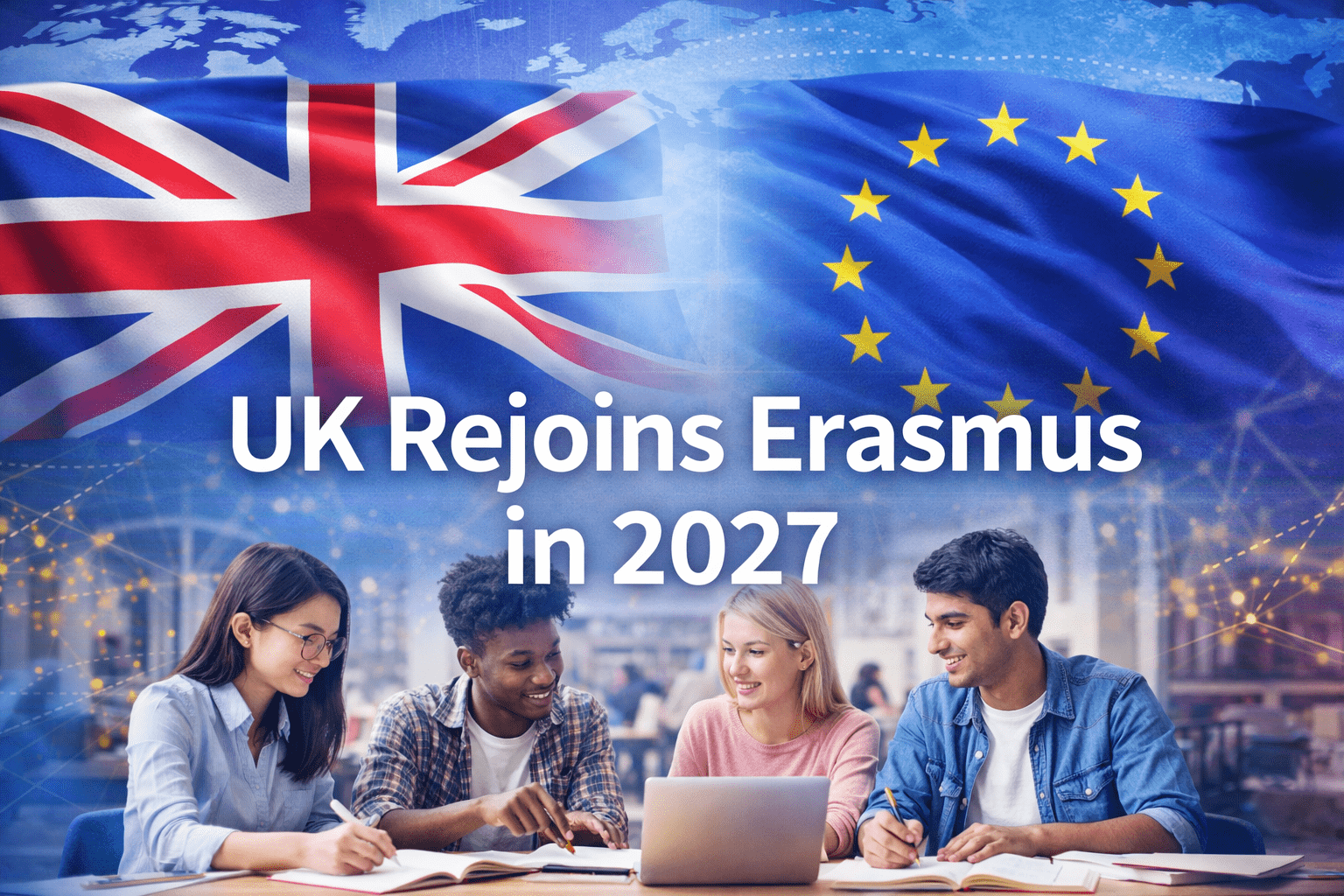
As the CEO of Shakil Education Group, with over 20 years guiding students through global education paths, I have seen how programs like Erasmus change lives. This news about the UK rejoining the Erasmus+ scheme in 2027 hits close to home for many of our clients from Bangladesh and around the world. Let me break it down for you in simple terms, based on what we know from recent announcements.
What Is the Erasmus+ Scheme?
First off, Erasmus+ is a European Union program that lets students, trainees, and young people spend time abroad for study or work experience. It started back in 1987 and has helped over 16 million people since then. For university students, it means you can spend part of your degree—usually a semester or a full year—at another institution in a participating country without paying extra tuition fees. You also get grants to cover living costs, travel, and sometimes more.
The program runs through three main Key Actions (KA1, KA2, KA3), plus special actions like Erasmus Mundus and Jean Monnet.
- Key Action 1 (KA1): Learning Mobility — This is the core part most students know. It funds individual mobility for study, traineeships, training, teaching, or youth exchanges. Higher education students can study or do traineeships abroad. Staff can teach or train. It also includes blended intensive programs (short in-person plus online) and virtual exchanges.
- Key Action 2 (KA2): Cooperation among Organizations — This supports partnerships between institutions to develop innovative practices. Examples include Cooperation Partnerships for sharing ideas, Alliances for Innovation (like knowledge triangles with business), Capacity Building projects (especially with non-EU countries), and Small-scale Partnerships for newcomers.
- Key Action 3 (KA3): Support for Policy Development — This focuses on policy reforms, stakeholder dialogue, and tools for transparency in qualifications.
Other key types include:
- Erasmus Mundus Joint Masters → High-level master's programs run by consortia of universities from different countries. They offer full scholarships, including for students from outside Europe.
- Jean Monnet Actions → These promote teaching, research, and debate on EU integration.
- Sport actions and youth participation activities, like Discover EU (free travel for 18-year-olds).
The scheme covers 27 EU countries plus others like Iceland, Norway, Liechtenstein, Serbia, Turkey, and North Macedonia. In 2019, before the UK left, it supported around 10,000 UK university students and 8,000 trainees to go abroad. This is not just for Europeans; international students in the UK can join if their home university has partnerships.
For Bangladeshi students, this opens doors. Many of you come to us at Shakil Education Group asking about affordable ways to gain international exposure. Erasmus+ could make that easier, especially if you're enrolled in a UK university.
Why Did the UK Leave, and What's Changing Now?
The UK pulled out of Erasmus+ in December 2020 as part of Brexit. At the time, the government replaced it with the Turing scheme, which funded over 40,000 placements in the 2024-25 academic year with a budget of £105 million. Turing focuses on global opportunities, not just Europe, and prioritizes students from disadvantaged backgrounds. But some students found it less reliable than Erasmus, with issues around funding consistency and partnerships.
Now, after talks with the EU, the UK will rejoin Erasmus+ starting in the 2027-28 academic year. This is part of Prime Minister Keir Starmer's push to reset ties with Brussels. The deal was sealed on December 17, 2025, and it's a big win for education ties.
Under the agreement, the UK will pay £570 million to join for that first year—a 30% discount from the standard £810 million fee based on GDP. That's smart negotiating, and it recognizes the UK's past contributions. Back in 2020, the UK got a net gain of £243 million from the program, according to Universities UK. Future years will need new deals, but this sets a strong foundation.
How Will It Work for UK Students and Institutions?
From 2027, UK universities, colleges, and other organizations can apply to participate again. A new national agency will handle things on the UK side, with applications opening in mid-2026. If you're a student, you won't apply directly—you go through your school or workplace. Eligible groups include university students, apprentices, teachers in training, sports coaches, and even school language projects.
Programs can last from 2 days to 12 months. Grants cover travel, accommodation, living expenses, and course fees. In the first year back, over 100,000 people in the UK could benefit, including students and staff. That's a huge number—compare it to the 9,900 UK students who went abroad under Erasmus in 2020, versus 16,100 who came in.
For international students like those from Bangladesh, this means more options if you're studying in the UK. You could spend time in Germany or France as part of your UK degree, building a global network. We've helped hundreds of Bangladeshi students secure UK visas through our UK study services, and this adds another layer of value.
Benefits for Bangladeshi and International Students
Let's talk about the real impact. As someone who's advised students for decades, I know programs like this boost your resume. Employers love candidates with international experience— it shows adaptability and cultural awareness. For Bangladeshi students, who often face high costs for overseas education, Erasmus+ grants make it more affordable. You might get up to €600 per month for living costs, depending on the destination.
The UK economy gains too. Universities UK estimates the program brought in economic benefits worth millions. More European students coming to the UK means diverse classrooms, which enriches learning for everyone, including internationals.
If you're from Bangladesh, think about this: The UK is already a top destination, with over 245,000 international students from South Asia in 2024. Rejoining Erasmus could attract even more partnerships, making UK degrees more appealing. At Shakil Education Group, we've seen a 25% rise in inquiries about UK programs in the last year—check our latest blog on UK scholarships for tips on funding.
On the flip side, the Turing scheme will continue, so you have choices. Turing sent students to 150 countries last year, including non-EU spots like the US and Australia. But Erasmus+ has stronger ties in Europe, where travel is cheaper and visas easier for many.
Opportunities for Bangladeshi Students in the UK's Erasmus+ Rejoining
Since Shakil Education Group is based in Bangladesh, let's focus on what this means for you here. As of December 2025, applications for the Erasmus+ 2026 cycle are open, offering Bangladeshi students and universities key chances to join international projects. With the UK rejoining in 2027, Bangladeshi students studying in the UK will gain access to EU-wide exchanges, which could include fully funded stays in countries like Spain or Italy.
For instance, under International Credit Mobility (ICM), Bangladeshi universities can partner with European ones for short-term student and staff exchanges. The deadline for ICM applications is February 20, 2026. Erasmus Mundus Joint Masters remain open to Bangladeshis, with scholarships covering tuition, travel, and up to €1,000 monthly allowance—over 50 Bangladeshi students won these in 2025. The UK's return adds more spots, as UK institutions can now host and send participants.
Latest news: The EU Delegation in Bangladesh announced on December 7, 2025, that four Erasmus+ actions are available, including capacity building for higher education to improve curricula and teaching quality. This is vital amid Bangladesh's youth unemployment rate of around 11.5% in 2024, which rose to 13.5% for tertiary-educated youth. Programs like these build skills that employers seek. At Shakil, we've seen Bangladeshi alumni with Erasmus experience land jobs faster—contact us for success stories.
Preparing for 2027: What Should You Do Now?
If you're planning to study in the UK starting in 2026 or later, start researching universities with strong Erasmus histories. Look at institutions like the University of Edinburgh or University College London—they were big players before Brexit.
For applications, keep an eye on mid-2026 deadlines. Your university will guide you, but building language skills now helps. Many programs require basic proficiency in the host country's language.
At Shakil Education Group, we're already updating our resources. Visit our study abroad guide for step-by-step advice on UK admissions. We offer free consultations to Bangladeshi students—over 500 families trusted us last year for visa success rates above 95%.
Broader Implications for Global Education
This move signals a thaw in UK-EU relations after Brexit. It's not just about students; it boosts research collaborations and cultural exchanges. For international education providers like us, it means more opportunities to partner across borders.
In Bangladesh, where youth unemployment hovers around 11.5%, global skills from programs like Erasmus can make a difference. We've placed students in UK programs that led to jobs in tech and finance—adding Erasmus experience could raise starting salaries by up to 25% based on industry reports.
The UK government sees this as investing in future skills. With £570 million committed, it's a bet on education driving growth. Universities welcome it, as it could increase enrollment by 10-15% in exchange programs.
Wrapping Up – This Could Be Your Chance
Rejoining Erasmus+ in 2027 is exciting news for anyone eyeing UK education. It restores a proven pathway for affordable international experience, benefiting over 100,000 people right away. As CEO of Shakil Education Group, I've spent over 20 years helping students like you navigate these changes. If you're from Bangladesh or elsewhere, this could be your chance to expand horizons without breaking the bank.
Ready to explore? Head to our contact page for personalized advice. Let's make your study dreams real.
For more details, check sources like the BBC article on the announcement or The Guardian's explainer.