Where you choose to buy your groceries will make or break your monthly budget. If you walk into the wrong store for your daily essentials, you will burn through your Blocked Account funds much faster than necessary. Let us break down the local supermarket landscape, so you know exactly where to go on your first day.
The Discounters: Your Everyday Budget Savers
If you want to keep your living costs strictly within budget, Aldi and Lidl are your main targets. They do not bother with fancy store displays; instead, they pass those operational savings directly to you.
- Aldi: This is your absolute baseline for cheap, high-quality private-label goods. To give you an idea of the math,
Typical Prices:
Milk (1 liter): €0.79
Eggs (10-pack): €1.99
Bread (500g): €1.00
Apples (1 kg): €2.49
- Lidl: Aldi's biggest rival operates on the same logic but often features a slightly larger fresh bakery and meat section. The Standard Markets: Better Selection, Higher Prices.
Typical Prices:
Milk (1 liter): €0.89
Eggs (10-pack): €2.49
Bread (500g): €1.20
Chicken Breast (1 kg): €6.99
You will eventually need a specific ingredient that the discounters simply do not carry, especially if you are cooking international dishes from back home. That is when you step up to the mid-tier and premium stores.
- Rewe: This is a highly reliable middle ground. They stock a massive variety of name brands and international products. Naturally, the prices creep up a bit to match the variety.
Typical Prices:
Milk (1 liter): €0.99
Eggs (10-pack): €2.39
Bread (500g): €1.20
Tomatoes (1 kg): €2.49
- Edeka: Consider this the highest tier for your daily shopping. The stores are well-designed, the organic produce selection is massive, but you definitely pay a premium for the experience. Locals always advise students to only shop here for specific specialty items, not their bulk weekly staples.
Typical Prices:
Milk (1 liter): €1.09
Eggs (10-pack): €2.99
Bread (500g): €1.50
Cheese (200g block): €2.00
The Hypermarket Option
- Kaufland: If your city has a Kaufland nearby, take full advantage of it. It operates like a massive superstore selling both groceries and general household items. Because of their sheer size, their prices compete directly with the discounters. It is the perfect place to do a massive, cheap haul once a month.
Typical Prices:
Milk (1 liter): €0.85
Eggs (10-pack): €2.19
Bread (500g): €1.30
Potatoes (1 kg): €1.49
What You Actually Pay to Eat Out in Germany
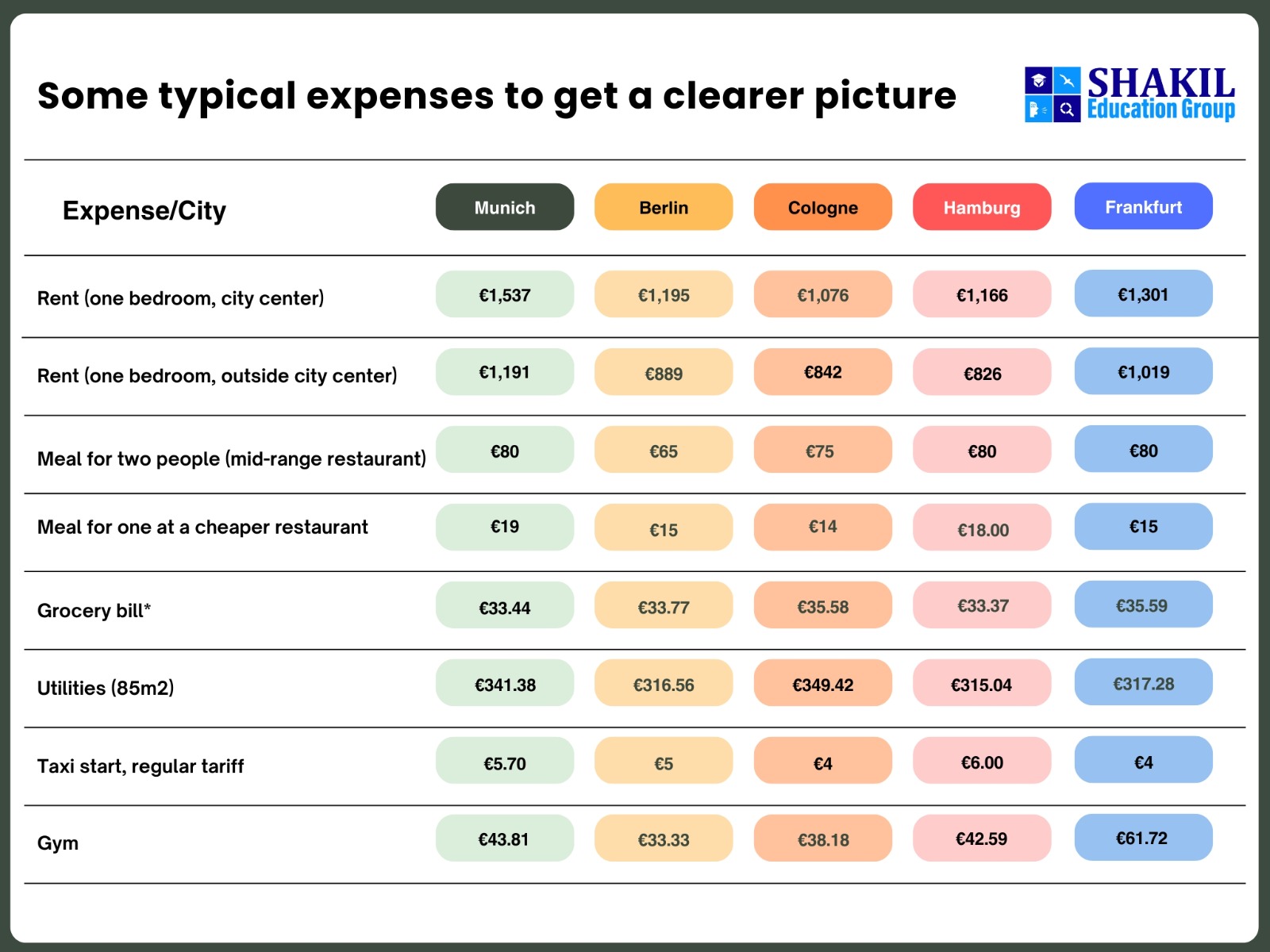
Sitting down at a restaurant here adds up fast. If you go out with a friend, even a casual place—say, an Italian spot or a beer hall—usually leaves you with a bill around €65. It is not fine dining, just normal dinner pricing.
That is why you see so many students walking around with Döner kebabs. It is the unofficial student meal. You get a sandwich loaded with meat and veggies for about €15, and it actually fills you up.
Drinks are where they get you. A half-liter of beer runs close to €4.50. If you are not drinking, a cappuccino is around €3.55. Even a small bottle of water or a soda will cost you. It adds up before the food even arrives.
If you are used to eating out often, Germany might force you to adjust. Most students here learn to cook because doing it yourself is the difference between saving money and watching it disappear.
What Groceries Actually Cost
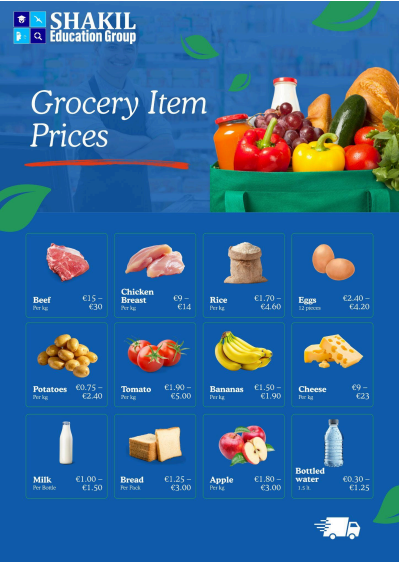
Here’s an overview of the typical grocery prices for some common items in Germany. Keep in mind that prices can vary depending on the city and the store:
|
Item
|
Average Price
|
|
Milk (1 liter)
|
€0.79 - €1.09
|
|
Eggs (10-pack)
|
€1.99 - €2.99
|
|
Bread (500g)
|
€1.00 - €1.50
|
|
Chicken Breast (1 kg)
|
€6.00 - €8.00
|
|
Apples (1 kg)
|
€2.49 - €3.50
|
|
Potatoes (1 kg)
|
€1.49 - €2.00
|
|
Cheese (200g block)
|
€1.50 - €3.00
|
|
Tomatoes (1 kg)
|
€2.49 - €3.00
|
|
Pasta (500g)
|
€0.69 - €1.00
|
|
Coffee (500g)
|
€2.99 - €4.99
|
Healthcare System
The healthcare system in Germany is one of the best in the world. It provides high-quality medical care, advanced hospitals, and mandatory health insurance for everyone, including international students and workers. Before moving to Germany, it’s important to understand how the system works.
Structure of the German Healthcare System
Germany has a universal healthcare system, meaning everyone must have health insurance.
There are two main types of health insurance:
|
Insurance Type
|
German Name
|
Who Uses It
|
|
Public health insurance
|
Gesetzliche Krankenversicherung (GKV)
|
Most students and employees
|
|
Private health insurance
|
Private Krankenversicherung (PKV)
|
High-income earners and some freelancers
|
About 90% of people use public health insurance.
Major public insurers include:
- Techniker Krankenkasse
- AOK
- Barmer
- DAK-Gesundheit
Health Insurance for International Students
Health insurance is mandatory for student visas and university enrollment.
Student Health Insurance Cost
|
Age
|
Monthly Cost
|
|
Under 30 years
|
€120 – €140
|
|
Over 30 years
|
€160 – €220
|
This insurance covers most medical services.
What Public Health Insurance Covers
Public insurance usually covers:
- Doctor visits
- Hospital treatment
- Prescription medicines
- Mental health services
- Pregnancy care
- Emergency treatment
Example Coverage
|
Medical Service
|
Coverage
|
|
General doctor visit
|
Fully covered
|
|
Hospital stay
|
Mostly covered
|
|
Prescription medicine
|
Small co-payment
|
|
Dental basic treatment
|
Partially covered
|
|
Emergency services
|
Fully covered
|
Doctors and Medical Care
Healthcare services are delivered through different types of doctors.
Types of Medical Providers
|
Provider
|
Role
|
|
General practitioner (GP)
|
First contact doctor
|
|
Specialists
|
Dermatologist, cardiologist, etc.
|
|
Hospitals
|
Major treatments and surgeries
|
|
Pharmacies
|
Medication and advice
|
Students often visit a general practitioner first before seeing specialists.
Hospitals in Germany
Germany has over 1,900 hospitals with modern medical technology.
Hospitals can be:
|
Type
|
Description
|
|
Public hospitals
|
Government-run
|
|
Non-profit hospitals
|
Often run by charities
|
|
Private hospitals
|
Privately owned
|
Emergency departments provide 24/7 medical care.
Emergency Healthcare
Important emergency numbers:
|
Emergency Service
|
Number
|
|
Ambulance / medical emergency
|
112
|
|
Police
|
110
|
Emergency services are available nationwide and very reliable.
Pharmacies (Apotheke)
Pharmacies are called Apotheke in Germany.
Key features:
- Highly trained pharmacists
- Prescription medication is available only with a doctor’s prescription
- Many pharmacies offer consultation and health advice
Healthcare Quality
Germany consistently ranks among the top healthcare systems globally due to:
- Highly trained medical professionals
- Advanced hospitals and research
- Universal health insurance coverage
- Short waiting times compared to many countries
Mental Health Services
Germany offers good mental health support.
Covered services include:
- psychotherapy
- psychiatric treatment
- counseling services at universities
However, waiting times for therapy can sometimes be longer.
Digital Health Services
Healthcare is becoming increasingly digital.
Examples include:
- electronic prescriptions
- online doctor appointments
- health insurance mobile apps
Some insurers like Techniker Krankenkasse offer digital health services.
Healthcare Costs Without Insurance
Healthcare in Germany can be very expensive without insurance.
|
Medical Service
|
Approximate Cost
|
|
Doctor visit
|
€50 – €150
|
|
Hospital stay (per day)
|
€300 – €1,000
|
|
Surgery
|
€2,000 – €20,000
|
This is why health insurance is legally required.
Advantages of the German Healthcare System
Major benefits include:
- Universal access to healthcare
- High-quality hospitals and doctors
- Comprehensive insurance coverage
- Strong medical research and innovation
Important Things to Know Before Moving
Before arriving in Germany, students should:
- Arrange health insurance before visa application
- Carry insurance documents
- Register with a local doctor
- Know emergency numbers (112)
Simple Summary
The healthcare system in Germany is based on mandatory health insurance, mainly through public insurance providers. It provides high-quality medical care, modern hospitals, and comprehensive coverage for residents, including international students.
Students typically pay around €120–€140 per month for health insurance, which covers most healthcare services.